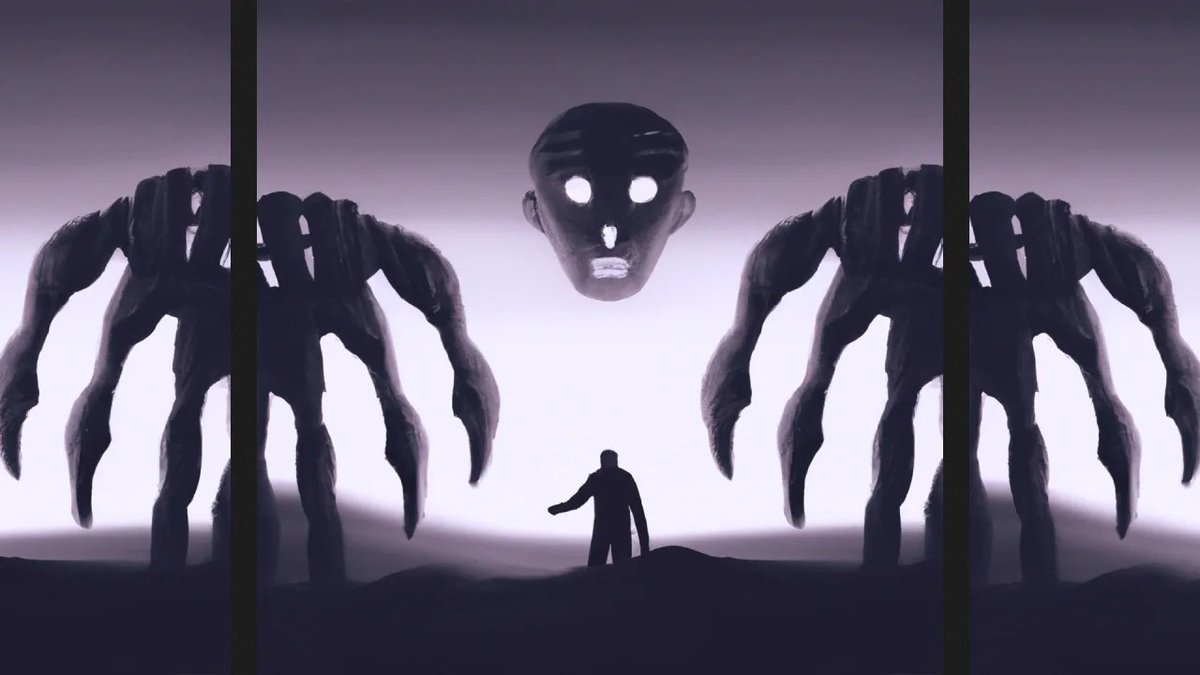
The digital canvas is ablaze with debate, and at the heart of it lies The Broader Picture: AI, Creativity, and Existential Anxiety Among Artists. For many creators, the rise of artificial intelligence isn't just another technological leap; it’s a seismic shift that forces us to re-examine what it means to be human, what defines art, and whether our unique spark is truly irreplaceable. This isn't just about pixels and algorithms; it's about our deepest fears and aspirations reflected in the mirror of a machine.
At a Glance: Navigating AI's Impact on Art
- It's About Us, Not Just AI: The heated discussions surrounding AI art often reveal more about human fears—like job loss, our sense of unique purpose, and the definition of originality—than about the technology itself.
- Three Core Anxieties: Artists grapple with concerns over AI replacing their livelihoods, challenging the notion of human exceptionalism, and blurring the lines of what constitutes original and authentic work.
- The Shifting Landscape: AI tools are democratizing creativity, enabling new forms of expression, and even serving as catalysts for social change, but they also bring complex ethical questions around data ownership and inherent biases.
- The Human Edge (For Now): While AI can mimic and generate, humans still infuse art with intention, context, and self-reflection, giving it a unique kind of "meaning." This distinction, however, may not last forever.
- Embrace, Don't Resist: The path forward for artists likely involves synthesizing with AI, viewing it as a powerful amplifier for human creativity rather than an existential threat to be fought.
The Heart of the Matter: Why This Conversation Matters Now
For centuries, artists have been at the vanguard of cultural shifts, interpreting the world around them and pushing the boundaries of expression. Today, that world is rapidly being reshaped by artificial intelligence, and artists find themselves uniquely positioned at the nexus of wonder and dread. This isn't merely a theoretical discussion; it's a deeply personal one for every creator who has poured their soul into a piece of work, only to wonder if a machine could do it faster, cheaper, or even "better."
The anxieties are palpable, echoing concerns from past industrial revolutions, yet feeling distinct due to the very nature of creative work—long held as a uniquely human domain. To truly understand the current friction, we must dissect the core pillars underpinning this complex debate.
Pillar 1: The Job Security Jitters – A Familiar Fear in a New Guise
Let’s be honest: the first thing many artists think about when they hear "AI-generated art" is their livelihood. Will this technology replace me? Can I compete with something that doesn’t sleep, doesn’t eat, and requires no salary? These aren't irrational fears; they're deeply rooted in history.
Think back to the Luddites, textile workers in 19th-century England who smashed machinery, fearing it would cost them their jobs. While often portrayed as technophobes, their concerns were legitimate: automation fundamentally changed their industry and their lives. Art, for all its spiritual and cultural value, is also an industry. It is not immune to the same technological pressures that have reshaped agriculture, manufacturing, and even medicine. Gig economy artists, illustrators, concept designers, and photographers are already seeing direct impacts, with clients exploring AI alternatives for certain tasks.
Beyond Replacement: Amplifying Human Potential
Yet, to only see AI as a job-killer misses a crucial point. Historically, new tools have often amplified human capabilities rather than simply replacing them. The camera didn't kill painting; it freed it from strict representation, allowing it to explore abstraction. Digital tools didn't end traditional media; they offered new avenues and efficiencies. The key here isn't to resist, but to adapt and learn how AI can serve as a powerful assistant, handling repetitive tasks, generating variations, or even just jumpstarting ideas. The challenge is in defining the new value proposition for human artists in a world where foundational creative tasks can be automated.
Pillar 2: The Myth of Human Exceptionalism – Is Our Spark Unique?
Perhaps the most profound anxiety AI stirs among artists—and indeed, humanity at large—is the challenge to our sense of human exceptionalism. For centuries, we've held a firm belief that humans are fundamentally different, superior even, possessing unique moral value, rationality, consciousness, and above all, creativity. This is our distinguishing feature, the divine spark.
But what happens when a machine starts mimicking these very qualities? From a purely mechanistic perspective, the idea of human exceptionalism becomes increasingly difficult to sustain. We, too, are biological machines, operating via complex pattern recognition, intuition shaped by experience, and learned behaviors. AI, in its sophisticated forms, is designed to emulate and even surpass these functions. When OpenAI’s GPT-4.5, for instance, proves indistinguishable from a human in a Turing Test, the lines between human and machine intelligence begin to blur in unnerving ways.
The Rise of AGI and the Blurring Line
Researchers like Yann LeCun and Stuart Russell are seriously considering Artificial General Intelligence (AGI)—AI that could match or even surpass human intelligence across a broad range of creative tasks. This isn't just about generating pretty pictures; it's about the potential for machines to compose symphonies, write compelling novels, or design groundbreaking architecture with minimal human input. The very concept of "creativity" itself gets stretched and redefined. The existential knot tightens: if a machine can be creative, what then is our special place in the universe? This thought, which directly relates to the anxieties surrounding generative AI models, is a significant part of the broader conversation about AI’s impact on our emotional well-being.
Pillar 3: The Shifting Sands of Originality and Authenticity
The third major pillar of anxiety among artists revolves around originality and authenticity. In a world where AI models are trained on billions of existing images, texts, and sounds, is anything truly original anymore? And if a machine creates something beautiful or profound, is it "authentic"?
The truth is, the notion of originality has always been a bit squishy. Most human creation, if we’re honest, is a "clever remix" of existing ideas, influences, and techniques. Artists learn by studying masters, building upon established forms, and reinterpreting cultural narratives. No artist creates in a vacuum; all art is a conversation across time and space. AI, in a sense, is simply taking this collective process to its logical, data-driven extreme. It's a vast, statistical engine performing the ultimate remix.
Authenticity: A Matter of Perception, Not Production
As for authenticity, this is inherently subjective. If a machine-produced work moves a viewer, evokes emotion, or inspires thought, is it not as "authentic" in its impact as a human creation? Insisting on a clear, unbreachable boundary between "real" and "artificial" art often reflects our own anxieties about definition and control, rather than the true nature of art itself. All creation, whether human or artificial, is part of an ongoing, collective process of imitation, iteration, and reinterpretation. The source of inspiration or generation may change, but the potential for profound impact remains.
Beyond the Pillars: Deeper Reflections & Emerging Realities
The core anxieties described above are often amplified by other pressing issues that, while practical, also feed into our existential concerns.
Legal & Ethical Quagmires: Who Owns What?
The legal and ethical questions surrounding AI-generated art are complex and largely unresolved. Issues like data collection—where AI models often use massive datasets without explicit consent or compensation for original creators—raise serious questions of transparency and intellectual property. Existing copyright laws, designed for a human-centric creative ecosystem, are simply not equipped for this new paradigm. This isn't just about fairness; it's about the very foundational principles of creative ownership and recognition. While these are practical concerns, they fuel the deeper unease about whether artists' rights and contributions will be respected in an AI-driven future.
The "Meaning" Frontier: Where Humans Still Hold the Edge (For Now)
If AI can mimic creativity, what truly differentiates us? For now, the primary difference lies in "meaning." Humans incorporate intention, context, and self-reflection into their creative process, imbuing their work with significance that goes beyond mere aesthetics. When an artist paints a portrait, they bring their lived experience, their relationship with the subject, and their conscious desire to communicate a specific feeling or idea. AI's learning, by contrast, is statistical; it operates without existential awareness or conscious purpose. It doesn't feel the joy or pain it might depict.
However, this boundary may not hold indefinitely. As AI systems become more sophisticated, integrating neural networks that can process vast amounts of contextual data, we might see emergent properties akin to consciousness or purpose. The day AI can genuinely "intend" or "reflect" would usher in a truly transformative era, blurring the line of "meaning" as well.
The Path Forward: Synthesis, Not Resistance
Given the inevitability and rapid advancement of AI, human survival and flourishing may depend not on clinging desperately to a perceived uniqueness, but on embracing synthesis. This could mean integrating AI tools seamlessly into our creative workflows, using them to enhance our vision, speed up processes, or explore entirely new aesthetic territories. It might even mean, in a more distant future, a merging with AI—a symbiotic relationship where the distinction between human and machine becomes temporary, a phase in our evolution. Resisting this tide risks being left behind; learning to surf it offers unprecedented opportunities.
AI's Double-Edged Sword: Anxieties and Opportunities for Artists
The landscape shaped by AI isn't simply one of fear; it's also rich with possibilities. For artists, understanding both sides of this sword is crucial for navigating the future.
The Ethical Minefield: Ownership, Consent, and Bias
- Ethical Concerns about Ownership: As discussed, the use of vast, often unconsented datasets for training AI models is a major sticking point. Artists deserve to know when their work is being used, and they deserve fair compensation or acknowledgment. The lack of transparency here erodes trust and necessitates urgent legal and ethical frameworks.
- Bias in AI: AI models are only as unbiased as the data they are trained on. If a dataset primarily reflects a narrow demographic or cultural perspective, the AI will reproduce and even amplify those biases. This means AI-generated content can inadvertently perpetuate stereotypes or exclude certain groups. Mitigating this requires diverse datasets, inclusive design principles, and rigorous auditing of AI outputs—a critical task for human oversight.
Lowering Barriers to Creative Innovation: Democratizing Art
One of the most exciting aspects of generative AI tools is their potential to democratize creativity. Tools like ChatGPT for text, Midjourney and DALL-E for images, and OpenAI Sora for video, make high-level creative outputs accessible to non-experts. Suddenly, someone without years of artistic training can generate compelling visuals, intricate prose, or even short films.
This isn't about replacing the expert artist, but empowering everyone. It allows individuals to rapidly prototype ideas, experiment with styles, and explore creative concepts that were once out of reach due to skill barriers or resource limitations. This democratization can lead to an explosion of new forms of expression and innovation from unexpected corners.
AI as an Ally for Impact: Preservation and Social Change
Beyond individual creativity, AI offers powerful tools for collective good:
- A Tool for Cultural Preservation: Imagine AI assisting in digitizing ancient texts, reconstructing historical sites from fragments, or translating endangered languages. While the details may vary, AI's ability to process and organize vast amounts of information can be invaluable in preserving human heritage for future generations.
- A Force for Social Change: AI-powered tools can support civic education and engagement, making complex issues understandable and actionable. In Kenya, for example, initiatives like "Corrupt Politicians GPT" exposed corruption by compiling public data, and "Finance Bill GPT" simplified complex legislative language. These tools empowered citizens, fostering greater understanding and participation in protests and civic discourse. AI can thus amplify the voices of the marginalized and provide new avenues for advocacy.
Amplifying, Not Replacing, Human Creativity
Ultimately, while job displacement is a legitimate fear that must be addressed through policy and retraining initiatives, the ideal use case for AI in the creative industries is to amplify human capabilities. Think of AI as a hyper-efficient assistant, a tireless brainstorming partner, or a master of repetitive tasks. It can free up human artists to focus on the truly unique, human-centric aspects of their work: concept development, emotional depth, narrative cohesion, and the infusion of personal meaning. The goal isn't AI or human; it's AI with human.
Navigating the Existential Currents: A Practical Guide for Artists
So, how do artists move forward in this rapidly evolving landscape, transforming anxiety into opportunity?
- Embrace the Tool, Master the Craft: Don't shy away from AI. Experiment with generative tools. Understand their strengths and limitations. The artists who will thrive are those who see AI as another tool in their kit, much like a brush, a camera, or a digital tablet. The craft remains paramount; AI just changes how you execute certain aspects of it. Learn to prompt effectively, curate outputs, and integrate AI-generated elements into a cohesive, human-directed vision.
- Define Your "Why": In a world where machines can generate "what," your "why" becomes your most valuable asset. What unique perspective do you bring? What personal stories, emotions, or intentions do you infuse into your work that a machine cannot (yet)? Lean into your lived experience, your specific cultural context, and your individual voice. This is the wellspring of true human meaning.
- Advocate for Ethical AI: Don't be a passive observer. Engage in the conversations around AI ethics, copyright, and fair use. Support organizations advocating for artists' rights. Demand transparency from AI developers and contribute to shaping the policies that will govern this new frontier. Your voice is crucial in ensuring that AI serves humanity, not just corporate interests.
- Cultivate Adaptability: The only constant is change. The creative landscape will continue to shift at an unprecedented pace. Develop a mindset of continuous learning, experimentation, and resilience. Be open to new mediums, new workflows, and new definitions of what it means to be an artist. Your greatest asset won't be a specific skill, but your ability to adapt and innovate.
The Road Ahead: Redefining Art, Artist, and Humanity
The dialogue around AI, creativity, and existential anxiety among artists isn't just about art; it's a microcosm of humanity grappling with its future. It forces us to ask fundamental questions: What is our ultimate purpose? What truly defines us? And in an age of intelligent machines, where do we draw the line between creator and creation?
The "broader picture" suggests that this era is less about AI replacing us and more about AI challenging us to evolve. It’s an invitation to redefine what it means to be an artist, to foreground the uniquely human elements of intention, emotion, and story, and to harness powerful new tools to amplify our message. The future of art isn't without humans; it’s a future where humans, perhaps, are more profound, more intentional, and more collaborative creators than ever before, in concert with their artificial partners. The canvas is waiting.