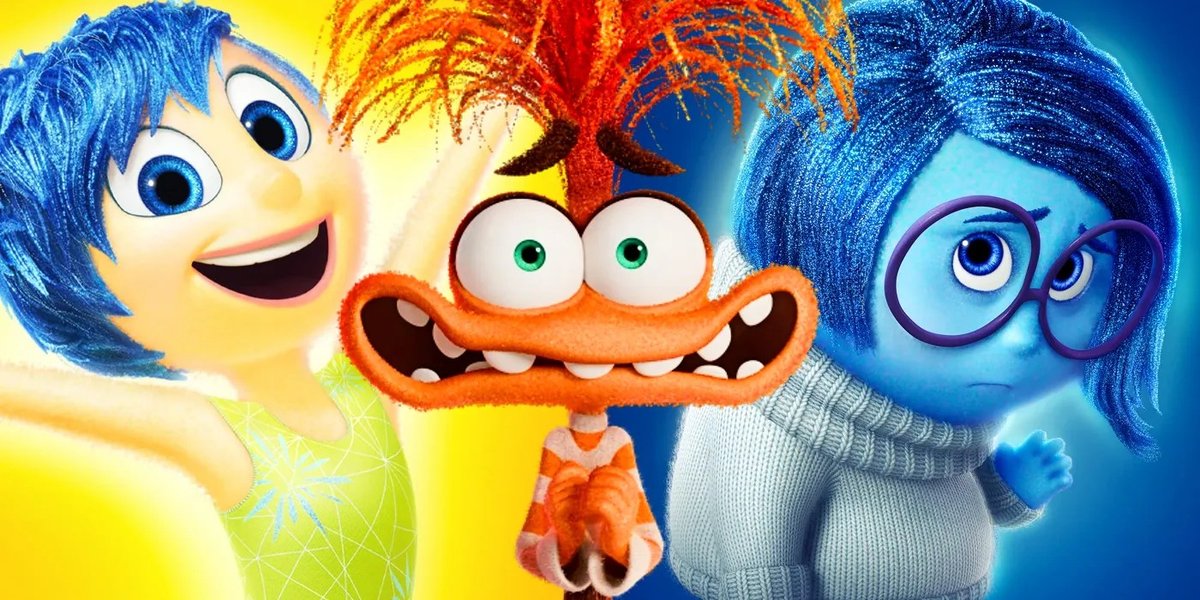
In the dynamic landscape where human creativity meets algorithmic innovation, few cultural touchstones offer as poignant and practical a lens as Pixar's Inside Out 2. This film, with its masterful depiction of complex emotions like anxiety, doesn't just entertain; it provides a profound framework for understanding the very real, often unspoken, emotional interplay at the heart of AI art generation. As generative AI continues its rapid evolution, moving from novelty to an indispensable tool, discerning the nuanced "feelings" (both human and perceived algorithmic) involved becomes crucial for creators, developers, and even casual users.
At a Glance: Navigating Emotions in AI Art
- The Inside Out 2 Analogy: The film's introduction of Anxiety, Ennui, Embarrassment, and Envy offers a powerful metaphor for understanding challenges and states within AI art creation.
- Anxiety isn't the Villain: Just as Riley's anxiety tries to protect her future, "algorithmic anxiety" can be a prompt for refinement and ethical consideration in AI art. Excessive anxiety, however, leads to creative blocks.
- Beyond the Pixels: Explore how emotions manifest in AI's output, from cohesive beauty (Joy) to uncanny distortions (Fear, Disgust), and the subtle signs of "ennui" in repetitive styles.
- Managing the Machine's "Mind": Learn practical strategies for prompt engineering, iterating, and understanding model biases to cultivate more intentional and emotionally resonant AI-generated art.
- Human-AI Empathy: The guide encourages applying emotional intelligence to our interaction with AI, recognizing its limitations, and fostering a healthier, more productive creative partnership.
The Emotional Core of Inside Out 2: A Quick Recap
Pixar's Inside Out captivated audiences by personifying the basic emotions—Joy, Sadness, Anger, Fear, and Disgust—within the mind of a young girl named Riley. The sequel, Inside Out 2, takes this brilliant concept further, introducing us to a teenage Riley, now navigating the tumultuous world of adolescence. With puberty comes a whole new crew of abstract, more complex emotions: Anxiety, Ennui, Embarrassment, and Envy.
Director Kelsey Mann, alongside Pixar's Chief Creative Officer Pete Docter, faced the challenge of visually clarifying these nuanced states. Their motivation wasn't just to tell another story; it was driven by the original film's lasting impact and the observed increase in anxiety levels among younger generations. The goal, as Docter puts it, is for Pixar to "cloak universal human experiences in engaging narratives."
Riley's anxiety, for instance, isn't some sinister force. It's a hyper-focused emotion trying to help her fit in and secure a spot on the hockey team after her old friends depart. The film beautifully distinguishes fear (related to "things we can see") from anxiety (characterized as "future-based fear" or "things we cannot see"). While Anxiety means well, excessive preoccupation with the future causes Riley to lose sight of her core values, make poor choices, and act out of character. Yet, the film's overarching message is clear: anxiety is a healthy emotion, a vital tool for preparation, provided it's managed effectively. Anxiety even has its own relaxation corner, symbolizing the importance of self-care. It's about empowering audiences to understand, destigmatize, and proactively manage their internal struggles, fostering empathy along the way.
Beyond the Human Mind: Projecting Emotions onto AI Creation
Now, why does a children's animated film about internal emotions matter for something as seemingly mechanical as artificial intelligence? Because at its heart, AI art generation isn't just about algorithms and pixels; it's a mirror reflecting human desires, intentions, and yes, our emotional responses. When we prompt an AI, we're not just inputting text; we're expressing a creative desire, a vision, a feeling we want to see manifested. And when the AI responds, its output evokes an emotional reaction in us.
The Inside Out 2 framework allows us to explore this human-AI dynamic with greater nuance. We can begin to "see" the echoes of these complex emotions not just in our own creative process when using AI, but also, metaphorically, in the very behavior of the generative models themselves. It helps us interpret the gaps, the successes, the frustrations, and the unexpected joys that come with co-creating with a machine. We're not suggesting AI literally feels emotions, of course. Rather, we're using the film's powerful archetypes to build a shared language for understanding the complex relationship between human creativity and synthetic generation.
Anxiety in the Algorithm: When AI Stares into the Future (and its Gaps)
In Inside Out 2, Anxiety is future-focused, always planning for what might happen. Translate this to AI art generation, and you find a striking parallel. The AI model, in a sense, is constantly trying to predict and fulfill the "future"—the desired output described in your prompt. This process is inherently filled with uncertainty, for both human and machine.
The User's Anxiety: Prompt Paralysis & Uncanny Valleys
Have you ever stared at a blank prompt box, unsure how to articulate your vision, fearing the AI won't "get it"? That's user anxiety. It's the "future-based fear" of an undesirable outcome:
- Prompt Paralysis: The fear of not crafting the perfect prompt, leading to endless tweaking or simply giving up.
- The Uncanny Valley: Generating an image that's almost right, but subtly off—a distorted face, too many fingers—evoking a sense of discomfort and disappointment. This often triggers a type of "fear" response, as the brain tries to reconcile what it sees with what it expects.
- Expectation vs. Reality: The gap between your vivid mental image and the AI's literal interpretation can be a source of frustration and anxiety, making you question your prompting skills or the model's capabilities.
This anxiety can lead to excessive prompting, endlessly regenerating images in search of an elusive perfection, mirroring Riley's struggle to constantly plan for every possible social scenario. It can cause you to lose sight of your original creative spark, just as Riley loses touch with her core values.
The Model's "Anxiety": The Struggle for Cohesion
While AI doesn't genuinely feel, we can project the concept of "anxiety" onto its operational challenges. Imagine the vast, complex neural networks "trying" to synthesize coherent images from millions of disparate data points. Its "anxiety" stems from the inherent difficulties of its task:
- Ambiguity of Prompts: Humans use nuance, metaphor, and context. AI needs explicit instructions. Ambiguous prompts ("a beautiful scene") create algorithmic uncertainty, leading to less predictable and often less satisfying results.
- Maintaining Cohesion: One of the hardest tasks for generative AI is maintaining semantic consistency across complex scenes, especially with multiple subjects or intricate details. A prompt for "a cat wearing a hat riding a bicycle on the moon" introduces several distinct concepts, and the model must "worry" about how to integrate them plausibly.
- Data Set Limitations: The model is only as good as the data it was trained on. If a concept is underrepresented or poorly depicted in its training data, the AI will "struggle," potentially generating imperfect or nonsensical outputs, much like Anxiety trying to navigate an unfamiliar social situation.
The Ethical Anxieties of Generative AI
Beyond the immediate creation process, a significant source of anxiety in the AI art space is ethical. As creators, we grapple with:
- Originality and Authorship: Who owns the art? What constitutes "originality" when a machine is involved?
- Bias and Misinformation: AI models inherit biases from their training data, which can lead to the generation of harmful stereotypes or even deepfakes. This raises anxieties about the spread of misinformation and the perpetuation of societal biases.
- Job Displacement: The fear that AI art will diminish the value of human artists or replace creative roles.
These larger concerns are the "things we cannot see" in the immediate future, much like Anxiety's broader worries for Riley's well-being. They require proactive "planning" and thoughtful policy development from researchers, developers, and users alike.
Inside Out 2's Lesson: Anxiety as a Preparatory Force (and its Limits)
The film teaches us that anxiety, in moderation, is a powerful tool for preparation. For AI art generation, this translates to:
- Iterative Refinement: Don't expect perfection on the first try. Use initial outputs, even flawed ones, as data points to refine your prompt, adjust parameters, or choose a different model. This iterative process is like Anxiety's careful planning, ensuring you're ready for different outcomes.
- Understanding Your Tools: Just as Riley learns about the different functions of her emotions, understanding the strengths and weaknesses of various AI models (e.g., one excels at photorealism, another at painterly styles) reduces your own anxiety and leads to better results.
- Ethical Vigilance: Proactively considering the ethical implications of your AI-generated art, from sourcing images responsibly to being transparent about AI's role, is a form of healthy "anxiety" that safeguards against negative future consequences.
However, just as excessive anxiety caused Riley to lose her way, over-optimization or obsessive concern about every detail can stifle creativity, leading to burnout and a loss of the joyful, experimental spirit inherent in artistic exploration. It’s about finding that balance.
Ennui & The Echo Chamber: When AI Art Feels... Flat
Ennui, introduced as a new emotion, represents apathy, boredom, or a lack of enthusiasm. In the context of AI art, it manifests in two primary ways:
- The Model's "Ennui" (Repetitive Outputs): Many AI models, especially early or general-purpose ones, can fall into predictable patterns. If you give them similar prompts, they often produce outputs that, while technically proficient, lack originality or a distinct voice. This can lead to a sense of algorithmic "ennui," where the machine seems to default to safe, generic options rather than truly innovative ones. It's like seeing the same stock photo aesthetic repeated across countless images.
- The User's Ennui (Creative Fatigue): As a user, if you constantly get similar-looking outputs despite varied prompts, or if the sheer volume of AI-generated art online starts to feel derivative and uninspired, you can experience creative ennui. The initial wonder fades, replaced by a sense of "seen it all before." This often happens when users rely too heavily on popular styles or common prompts without pushing the boundaries.
Combating ennui requires conscious effort from both ends: diverse training data for models and adventurous prompting and exploration from users.
The Blushing Algorithm: Embarrassment and Misinterpretation
Embarrassment is the emotion of discomfort or mortification, often arising from a social faux pas or a perceived flaw. When applied to AI art, this can be seen in:
- Algorithmic "Misunderstandings": AI doesn't understand context or common sense like humans do. A prompt that seems straightforward to you might result in an absurd, illogical, or even offensive image because the AI has misinterpreted a key element. For example, asking for "a cat playing the piano" might yield a cat with a human hand on a keyboard, a result that could easily elicit a cringe or "embarrassed" laugh from the human user.
- Public Perception of AI Flaws: When AI art goes viral for its flaws (e.g., nightmare-inducing hands, bizarre anatomy), it often sparks a collective sense of "embarrassment" for the technology itself. These moments highlight the current limitations and the comical ways AI can fail, serving as a reminder that it's still far from perfect.
- User Embarrassment: If you've ever proudly shared an AI-generated image only for someone to point out a glaring flaw you missed, you've likely felt a twinge of user embarrassment. This speaks to our emotional investment in the output and our desire for it to be perceived as successful.
Understanding the root causes of these "embarrassing" outputs—often linked to insufficient training data or a lack of true comprehension—is key to mitigating them through better prompting and model development.
Envy & Aspiration: AI Learning and the Quest for Uniqueness
Envy, in Inside Out 2, is depicted as the desire for what others have. In the AI art world, we can interpret this in a more abstract, aspirational sense:
- AI's "Envy" (Learning and Imitation): AI models learn by consuming vast amounts of existing art. In a metaphorical sense, they are constantly "envying" and attempting to replicate the styles, techniques, and creative outputs of human artists and other successful models. This drives the continuous improvement of models, as developers strive to make them capable of generating art that rivals human creativity.
- User Envy (Desire for Better Outputs): It's common for users to see stunning AI art generated by others and "envy" their results, wondering what prompts or models they used. This can be a positive motivator, encouraging users to learn more about prompt engineering, explore new tools, and push their own creative boundaries.
- The Quest for Uniqueness: As AI art becomes more ubiquitous, there's a growing "envy" for true originality and a unique artistic voice, both from human artists and, aspirationally, from AI models themselves. This pushes the boundaries of research towards models that can innovate rather than just imitate.
Managing the Emotional Palette: Practical Strategies for AI Artists
Understanding these 'Inside Out 2' emotions in the context of AI art isn't just an academic exercise; it's a practical framework for becoming a more effective and fulfilled AI artist. By recognizing these emotional states, both within ourselves and as metaphorical representations of AI behavior, we can develop better strategies.
Prompt Engineering with Empathy
Approach your prompts not just as commands, but as conversations.
- Be Specific, Yet Flexible: Clearly describe what you want, but be open to unexpected interpretations. Sometimes the "misinterpretation" can lead to something novel and exciting.
- Break Down Complexity: For intricate scenes, try generating elements separately and then composing them, or gradually add detail to your prompt. This reduces the "anxiety" of the model trying to juggle too many concepts at once.
- Use Descriptive Language: Instead of just "sad," try "a melancholic figure gazing at a stormy sea," which offers more visual cues for the AI to grasp the emotional tone.
Iterative Refinement: Embracing the "Trial and Error"
Don't be afraid of "failure." Each imperfect generation is a step forward, much like Anxiety planning for various outcomes.
- Micro-Adjustments: Tweak small elements of your prompt (e.g., changing "vibrant" to "muted," "day" to "dusk") to see how the AI responds.
- Inpainting/Outpainting: Use image editing tools within AI platforms to refine specific areas, fixing those "embarrassing" glitches or adding detail.
- Learn from Every Output: Even a "bad" image tells you something about how the AI interprets your words. Use that knowledge to improve your next prompt.
Understanding Model Biases and Limitations
Acknowledging the "embarrassment" of algorithmic flaws is crucial for responsible creation.
- Research Your Models: Understand what datasets a model was trained on, what it excels at, and where its common biases lie. This helps anticipate potential issues and informs your prompting choices.
- Critique Your Outputs: Actively look for biases in your generated art (e.g., stereotypical representations, lack of diversity). If you find them, adjust your prompts to counteract them or choose a different model.
Ethical Considerations: Beyond the Pixel
Addressing the "anxieties" around ethics is paramount.
- Transparency: Be clear when your art is AI-generated. This builds trust and helps normalize the technology.
- Respect for Artists: Use AI as a tool for augmentation and inspiration, not replacement. Support human artists and advocate for ethical AI development that protects their livelihoods and intellectual property.
- Mindful Creation: Avoid using AI to generate harmful, misleading, or exploitative content. Consider the broader impact of your creations.
Navigating 'Anxiety' with Tools like Perchance AI
Platforms like Perchance AI, a versatile text-to-image generator, can be excellent environments for learning to manage the "anxiety" of AI creation. Its flexible interface allows for experimentation with parameters and prompt variations, making it a valuable tool for understanding how different inputs translate to visual outputs. Exploring a generator like Perchance AI provides a sandbox for you to iterate and refine, taking the pressure off perfect first attempts and fostering a more relaxed, exploratory approach to AI art. It's akin to having a dedicated "relaxation corner" for your AI anxieties, allowing you to experiment freely and learn from every generation.
Decoding the Output: What Emotional Cues Can AI Art Carry?
Just as we learn to read Riley's core emotions through her actions and expressions, we can train ourselves to interpret the "emotional language" of AI-generated art.
- Joy/Sadness: Look at color palettes, composition, and subject matter. Bright, open compositions often convey joy; muted tones, closed forms, or solitary figures might suggest sadness.
- Anger/Fear/Disgust: Sharp lines, distorted forms, aggressive poses, or chaotic scenes can imply anger or fear. Images that fall into the uncanny valley or depict disturbing content can evoke disgust.
- Anxiety: Images that feel chaotic, restless, or depict scenes of impending doom or uncertainty can carry a sense of "anxiety." It might be an overly busy composition, a sense of tension in the figures, or a focus on shadows and obscured elements.
- Ennui: Repetitive motifs, bland color schemes, or a general lack of dynamism in an image could suggest algorithmic "ennui"—a generic, uninspired output.
- Embarrassment: The comical or unsettling distortions, the "broken" anatomy, or illogical elements often signal the AI's "embarrassed" misinterpretation.
- Envy/Aspiration: An image that perfectly captures a complex style or mimics a specific artist's technique might be seen as the AI's "aspirational" success, having "learned" from its vast dataset.
By consciously seeking these emotional cues, you not only improve your critical eye but also deepen your appreciation for the complex interplay between human input and algorithmic output.
Common Questions & Misconceptions About AI and Emotion
Let's tackle some frequently asked questions that arise when we discuss emotions in the context of AI art generation.
Can AI truly feel emotions?
No. As of now, and likely for the foreseeable future, AI models do not possess consciousness, sentience, or the biological mechanisms required to "feel" emotions in the way humans do. When we talk about "AI's anxiety" or "ennui," we are using anthropomorphic metaphors to better understand complex algorithmic behaviors and their impact on human users. It's a useful storytelling and analytical tool, not a literal claim about AI sentience.
Is it wrong to project human emotions onto AI?
It's not inherently wrong; it's a natural human tendency. We project emotions onto pets, inanimate objects, and even fictional characters. This projection can be helpful for understanding and interacting with complex systems like AI, especially when discussing its "failures" or "successes" in a relatable way. The key is to be aware that it's a projection and not to confuse it with genuine AI sentience. It fosters empathy for the process if not the machine itself.
Does AI art lack soul?
The "soul" of art is subjective and often tied to the intention, experience, and emotional depth of its creator. While AI doesn't have a soul, the human who guides the AI certainly does. When AI is used as a tool, an extension of the human artist's vision, the resulting art can absolutely possess "soul" because it is imbued with human intent, emotion, and aesthetic judgment. If AI art feels soulless, it might be due to a lack of genuine creative input from the human user, a reliance on generic prompts, or an uncritical acceptance of the AI's first output. The soul comes from the human co-creator.
The Future of Feeling: How Our Emotional Understanding Shapes AI Art
The journey with Inside Out 2 is far from over for Riley, and for us, the journey with AI art is just beginning. As AI models become more sophisticated, capable of generating increasingly nuanced and complex imagery, our ability to understand the emotional implications will become even more vital. Future AI systems might be designed with explicit goals to evoke specific emotional responses, requiring an even deeper dive into the psychology of aesthetics. This calls for developers to consider not just technical proficiency, but also the emotional and societal impact of their creations.
By actively engaging with the "Inside Out 2" lens, we're not just preparing for the future of AI art; we're actively shaping it. We're fostering a generation of creators who are not only skilled technologists but also emotionally intelligent artists, capable of navigating the complex interplay between algorithms and the human heart.
Beyond the Screen: Cultivating Emotional Intelligence in a Generative World
Just as Inside Out 2 aims to equip children (and adults) with frameworks for understanding their own emotional processes, our exploration of AI art through this lens aims to equip you. The ultimate takeaway isn't just about making better AI art, but about becoming a more conscious, empathetic, and effective creator in an increasingly generative world.
Embrace the learning curve. Don't let the "anxiety" of the blank prompt box or the "embarrassment" of a strange generation deter you. Allow the "ennui" of repetitive outputs to push you towards greater experimentation. And let the "envy" of amazing creations inspire you to hone your craft. By applying the lessons of Riley's emotional journey to your own creative process with AI, you can transform a seemingly technical endeavor into a deeply human, emotionally rich artistic adventure. The spectacle of AI art, much like the immersive experience of Inside Out 2 in theaters, is best appreciated when you bring your full emotional intelligence to the experience.